object
Pipe Organ
Portable pipe organ—signature attribute of the musicians’ patron.
Iconography & biography archive
Sources: Passio Sanctae Caeciliae; Maderno tomb inscription 1599; Chaucer, Second Nun's Tale.

Selected depiction
Saint Cecilia (Raphael)
Wikimedia Commons
Martyrs
Cecilia of Rome
of music—sings to God at the organ while the palm marks her three-day martyrdom.
Symbols that identify this saint in sacred art
object
Portable pipe organ—signature attribute of the musicians’ patron.
symbol
Virgin martyr victory; constant in devotional portraits.
object
Secondary musical emblem when organ is absent.
object
Virgin bride of Christ
object
Failed beheading narrative
How to read Saint Cecilia in paintings, sculpture, and altarpieces
Musical instruments vary by century—portative organ in Renaissance panels, harp or violin in baroque variants. Raphael’s Pala Baglione and Maderno’s marble corpse are textbook references. David plays harp as king; Cecilia’s organ is liturgical and paired with martyr palm.
object
Portable pipe organ—signature attribute of the musicians’ patron.
symbol
Virgin martyr victory; constant in devotional portraits.
object
Secondary musical emblem when organ is absent.
object
Virgin bride of Christ
object
Failed beheading narrative
Artists often dress Saint Cecilia in gold, red, white—these hues are not rigid rules but long-standing conventions that help recognition in polyptychs and chapel cycles.
Selected depictions of Saint Cecilia from verified sources
Wikimedia Commons
Painting
Saint Cecilia (Raphael)
Raphael
.jpg?width=600)
Wikimedia Commons
Painting
Saint Cecilia at the organ (Sebastiaen van Aken)
Sebastiaen van Aken
_-_Saint_Cecilia_Playing_an_Organ_-_1449086_-_National_Trust.jpg?width=600)
Wikimedia Commons
Painting
Saint Cecilia Playing an Organ (German School)
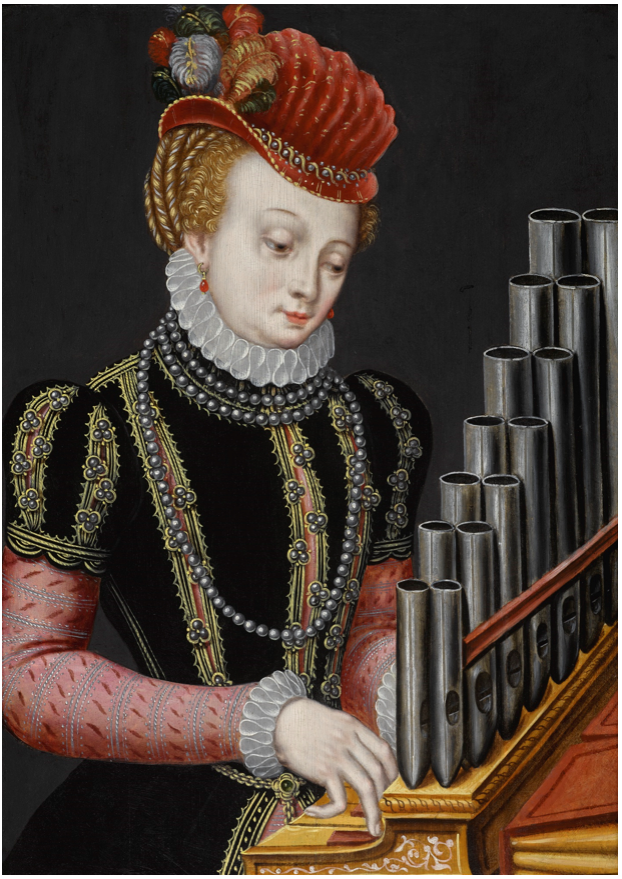
Wikimedia Commons
Painting
Saint Cecilia (AN ELEGANTLY-DRESSED LADY AT AN ORGAN, AS SAINT CECI)

Wikimedia Commons
Painting
Saint Cecilia (Saint Cecilia Playing the Organ).jpeg)

Wikimedia Commons
Painting
Saint Cecilia (Sebastiano Conca (attr) Saint Cecilia at the organ.j)

Wikimedia Commons
Painting
Saint Cecilia at the organ (anonymous)

Wikimedia Commons
Painting
Saint Cecilia (Justus Sustermans (1597-1681) (attributed to) - Sain)

Wikimedia Commons
Painting
Saint Cecilia (Saint Cecilia (Florence 17th century).jpg)

Wikimedia Commons
Painting
Saint Cecilia (Frans Francken II (workshop) Saint Cecilia.jpg)
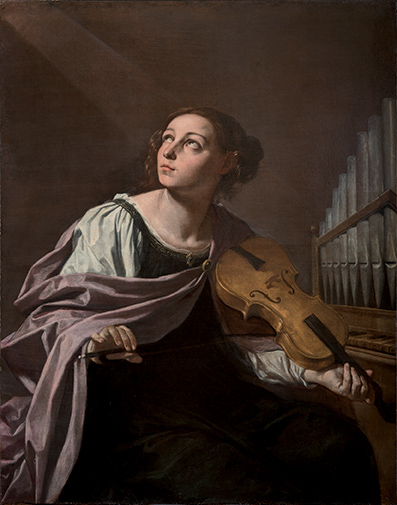
Wikimedia Commons
Painting
Saint Cecilia (Simone Cantarini - Saint Cecilia.jpg)

Wikimedia Commons
Painting
Saint Cecilia (Matthias Stom - Saint Cecilia and the Angel.jpg)
Life, witness, and historical framing
made music sacred in Western imagination. Her organ is not generic decoration—it is the sound of a bride singing inwardly while the world plays outside.
Where this figure stands in sacred history
Roman house church at Trastevere; incorrupt body discovery renewed baroque devotion and musical patronage.
Virgin bride of Christ who converted her household.
How death or vocation shapes devotion and art
Survived suffocation and botched beheading; died after three days of prayer.
Conventions painters and sculptors repeat
Organ, palm, crown; Maderno sculpture pose with neck wound.
Clues ordered for museum identification
Musical attribute—patron saint of music
Virgin martyr with victory palm
Later musical emblems in baroque and neoclassical art
Virgin bride of Christ
Failed beheading narrative
Quick checklist
Organ + palm + young woman = Cecilia in most museums.
Why communities invoke this figure
Patron of musicians; Accademia Nazionale di Santa Cecilia in Rome.
Avoid common misidentifications in galleries
Often confused with Saint Barbara: Both Roman virgin martyrs; Barbara has tower
Often confused with David: Both linked to music; David has harp as king, Cecilia has organ and palm
Scholarly curiosities and cult details
Cecilia made music sacred in Western imagination. Her organ is not generic decoration—it is the sound of a bride singing inwardly while the world plays outside.
Other Martyrs figures you might want to explore


