Saint Matthew vs Saint John the Evangelist
Winged man or money bag vs eagle and youthful face.
Money and a winged man = Matthew; eagle and youth = John.

Saint Matthew
Apostle, evangelist, and author of the first Gospel
Winged man angel, money bag, tax table
- Coins, tax table, angel with wings at his side
- Older, bearded writer at desk

Saint John the Evangelist
Apostle and author of the fourth Gospel
Eagle symbol, chalice, youthful apostle
- Eagle on manuscript or halo
- Younger, beardless or light beard
- Poison-cup serpent (some legends)
In the museum or church
Four-evangelist ceilings (Ravenna, Rome) place symbols in corners — photograph the symbol, not just the face.
Why they get confused
Both evangelists hold books and appear in Gospel iconography with angelic symbols.
Quick recognition
- ›Look for the four symbols: man, lion, ox, eagle.
- ›Money = Matthew.
At a glance
| Saint Matthew | Saint John the Evangelist |
|---|---|
| Winged man angel, money bag, tax table | Eagle symbol, chalice, youthful apostle |
| Matthew: angel/winged man, coins, writing at a desk, older | |
| John: eagle, younger, mystical Gospel tone, no money imagery | |
| Matthew: Calling from tax booth narrative, counting money | |
| John: Pietà support of Mary, Apocalypse visions | |
Similarities
- Book or scroll
- Evangelist portraits
- Four Gospels cycles
Common mistakes
- Any book-holder in a tetrad = generic apostle
- Ignoring evangelist symbols in corners
Related comparisons
Saint John the Evangelist

John the Baptist
The book belongs to the evangelist; the lamb belongs to the desert.
The youthful evangelist with a book vs the desert prophet with a lamb.
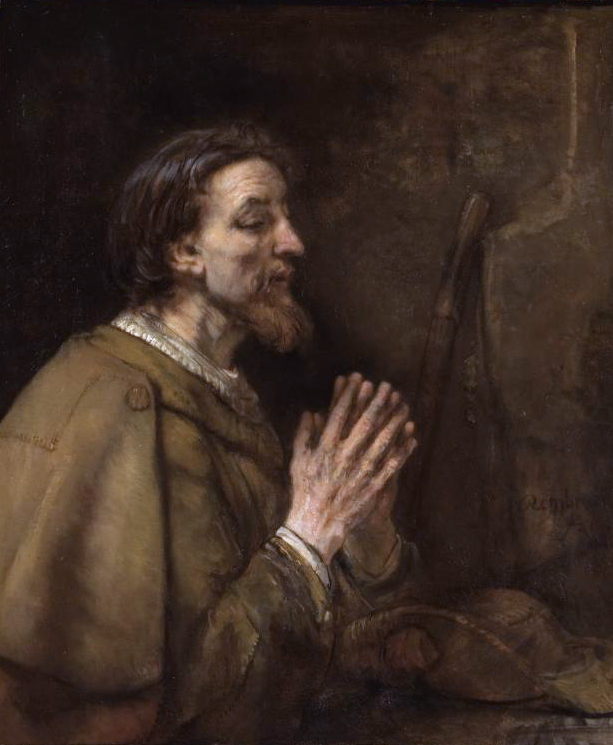
Saint James the Greater
Saint John the Evangelist
The shell means Santiago; the eagle means Gospel.
Pilgrim shell and staff vs youthful evangelist with book.
Saint Matthew

Saint Luke
Coins on the table = Matthew; ox in the corner = Luke.
Tax collector with coins vs physician with the ox.