object
Ointment Jar
Alabaster or glass vessel—primary Western attribute.
Iconography & biography archive
Sources: Luke 8:2; Mark 15–16; John 20; apostolicae sedis on clarified identity (2016).

Selected depiction
Mary Magdalene
Palazzo Pitti, Florence
New Testament
Magdalene
Magdalene—witness of the Crucifixion and first herald of the Resurrection—holds the jar that Western art turned into penitence made visible.
Symbols that identify this saint in sacred art
object
Alabaster or glass vessel—primary Western attribute.
symbol
Meditation on repentance (memento mori)
symbol
Flowing locks in penitent scenes; not universal in Eastern tradition.
How to read Mary Magdalene in paintings, sculpture, and altarpieces
The ointment jar links to anointing traditions; long unbound hair marks the “penitent Magdalene” type popular in Counter-Reformation art. Skull in wilderness scenes signals contemplation. Eastern icons may show her as myrrh-bearer at the tomb without extravagant hair.
object
Alabaster or glass vessel—primary Western attribute.
symbol
Meditation on repentance (memento mori)
symbol
Flowing locks in penitent scenes; not universal in Eastern tradition.
Artists often dress Mary Magdalene in red, gold—these hues are not rigid rules but long-standing conventions that help recognition in polyptychs and chapel cycles.
Selected depictions of Mary Magdalene from verified sources
Palazzo Pitti, Florence
Oil on canvas
Mary Magdalene
Titian

Wikimedia Commons
Painting
Mary Magdalene (devotional portrait)

Wikimedia Commons
Painting
Mary Magdalene (Jan Gossaert)

Galleria Palatina, Florence
Oil on canvas
Mary Magdalene
Artemisia Gentileschi

Wikimedia Commons
Painting
Mary Magdalene (Titian - Penitent Magdalene (Hermitage).jpg)

Museo del Prado
Oil on canvas
Mary Magdalene in Penitence
El Greco
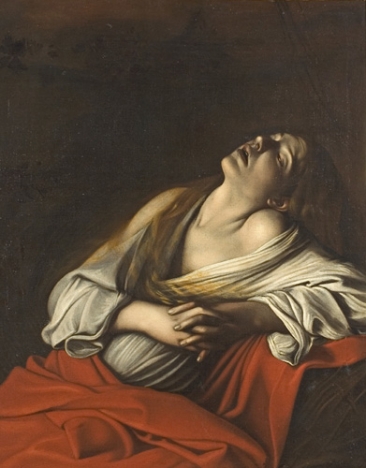
Private collection (historical attribution)
Oil on canvas
Mary Magdalene in Ecstasy
Caravaggio
Life, witness, and historical framing
Easter role is historically secure; later conflations with other women were corrected in modern teaching but persist in older labels. Trust the jar at the tomb and Noli me tangere gestures.
Clues ordered for museum identification
Anointing at Bethany tradition
Penitent Magdalene type
Meditation on repentance (memento mori)
Rich garments of the penitent saint
Why communities invoke this figure
Avoid common misidentifications in galleries
Often confused with Virgin Mary: Sometimes confused with other Marys in tradition
Scholarly curiosities and cult details
Magdalene’s Easter role is historically secure; later conflations with other women were corrected in modern teaching but persist in older labels. Trust the jar at the tomb and Noli me tangere gestures.
Other New Testament figures you might want to explore


