symbol
Sacred Halo
Cruciform nimbus = divine nature; simple halo may appear in transitional works—read context.
Iconography & biography archive
Sources: Four Gospels; creeds; Ecumenical Councils on Christology; iconographic handbooks (Ouspensky, Schiller).

Selected depiction
Christ Pantocrator
Saint Catherine's Monastery, Mount Sinai
New Testament
Christ
Christ—incarnate Word—appears in more iconographic types than any figure: Pantocrator, Ecce Homo, Salvator Mundi, Good Shepherd.
Symbols that identify this saint in sacred art
symbol
Cruciform nimbus = divine nature; simple halo may appear in transitional works—read context.
symbol
Marks divine nature in Eastern and Western sacred art
object
Passion iconography when Christ is shown as Man of Sorrows
object
Gospel book in teacher Christ or Salvator Mundi with orb.
object
Salvator Mundi: Christ as saviour of the world
object
Passion iconography when Christ is shown as Man of Sorrows
How to read Jesus Christ in paintings, sculpture, and altarpieces
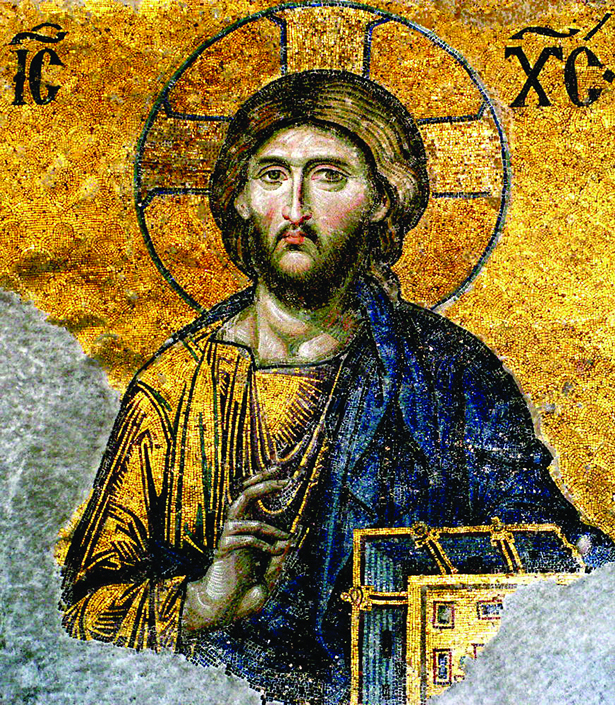
Cruciform halo marks divinity in many traditions. Blessing hand with Greek letters IC XC identifies Pantocrator. Sacred Heart is modern devotional type; Good Shepherd is early Christian. Christ is never shown with another saint’s personal martyrdom attribute unless in narrative (carrying cross).
symbol
Cruciform nimbus = divine nature; simple halo may appear in transitional works—read context.
symbol
Marks divine nature in Eastern and Western sacred art
object
Passion iconography when Christ is shown as Man of Sorrows
object
Gospel book in teacher Christ or Salvator Mundi with orb.
object
Salvator Mundi: Christ as saviour of the world
object
Passion iconography when Christ is shown as Man of Sorrows
Artists often dress Jesus Christ in white, red, gold, blue—these hues are not rigid rules but long-standing conventions that help recognition in polyptychs and chapel cycles.
Selected depictions of Jesus Christ from verified sources
Saint Catherine's Monastery, Mount Sinai
Encaustic icon
Christ Pantocrator
Byzantine (Sinai)
Wikimedia Commons
Painting
Jesus Christ (00058 christ pantocrator mosaic hagia sophia 656x800)

Wikimedia Commons
Painting
Jesus Christ (Christ Pantocrator Daphni Monastery.jpg)

Wikimedia Commons
Painting
Jesus Christ (Head of Christ attributed to Leonardo da Vinci.jpg)

Wikimedia Commons
Painting
Jesus Christ (Jesus Christ the Redeemer (2528585663).jpg)

Wikimedia Commons
Painting
Ecce Homo (Andrea Solario)

Wikimedia Commons
Painting
Jesus Christ (Adam Chmielowski Ecce Homo.jpg)

Wikimedia Commons
Painting
Jesus Christ (Andrea solario, ecce homo, 1505 ca..JPG)

Wikimedia Commons
Painting
Jesus Christ (Ecce Homo (1505-1510 circa).jpg)
Life, witness, and historical framing
study Christ in museums is to study theology made visible. Always identify the type first—majesty, passion, infancy—then attributes follow. Saints point to him; he does not borrow their keys or arrows.
Clues ordered for museum identification
Marks divine nature in Eastern and Western sacred art
Christ as teacher and Lord (Pantocrator, Salvator Mundi)
Devotional image of Christ's love and sacrifice
Passion iconography when Christ is shown as Man of Sorrows
Salvator Mundi: Christ as saviour of the world
Why communities invoke this figure
Avoid common misidentifications in galleries
Often confused with Saint Joseph: Both appear with the Christ Child in Holy Family scenes
Often confused with John the Baptist: Both central in baptism scenes; John points toward Christ
Scholarly curiosities and cult details
To study Christ in museums is to study theology made visible. Always identify the type first—majesty, passion, infancy—then attributes follow. Saints point to him; he does not borrow their keys or arrows.
Other New Testament figures you might want to explore


