Iconography & biography archive

Era: 1st century · Galilee, Jerusalem, RomeFeast: June 29Category: Apostles

Sources: Matthew 16:13–19; John 21:15–19; Acts 1–5, 10–12; Galatians 2; 1–2 Peter; 1 Clement; Dionysius of Corinth; archaeological tradition of the Vatican necropolis.

Saint Peter — Saint Peter
1 / 11
Browse depictions11 works

Selected depiction

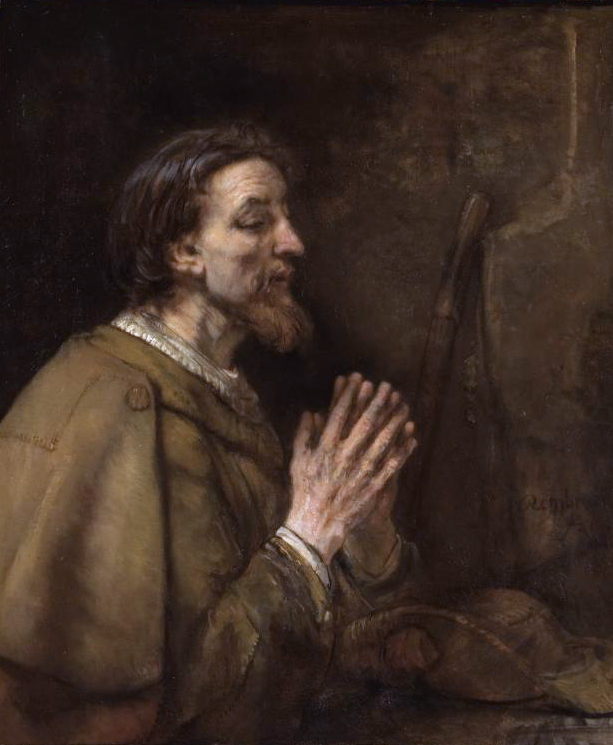
Saint Peter

El Greco (Domenikos Theotokopoulos) · c. 1600–1614

Museo del Greco, Toledo (via Google Art Project)

Apostles

Saint Peter

Simon Peter

Feast: June 29
Beginner difficulty

Peter—fisherman, rock of the Church, and first bishop of Rome—holds the keys Christ entrusted to him and remains the touchstone for papal iconography.

Gallery
0I

Iconographic Attributes

Symbols that identify this saint in sacred art

object

Keys

Christ’s words in Matthew 16:19—“I will give you the keys of the kingdom of heaven”—were visualized from the Middle Ages as the papal insignia. Gold and silver keys sometimes represent spiritual and temporal power in later heraldry; in Renaissance panels they are simply the unmistakable sign of Peter.

symbol

Inverted Cross

The Acts of Peter and later martyrologies describe Peter requesting an inverted cross out of humility. In modern popular culture the symbol is often misread; in sacred art it is a Petrine martyrdom badge, sometimes held as a small cross staff.

creature

Rooster

After the triple denial “before the cock crows twice” (Mark 14:30), the bird became a fixed companion in Denial scenes and standalone portraits reminding viewers of mercy.

object

Boat

Refers to the fishing boats of Capernaum and the post-Resurrection miraculous catch (John 21), linking Peter’s labor to ecclesial mission.

object

Fishing Net

A secondary attribute evoking the call narrative; appears in altarpieces of the vocation rather than papal state portraits.

object

Book

Gospels, doctrine, or wisdom

symbol

Cross

Reference to his martyrdom: he asked to be crucified upside down

II

Iconographic Field Guide

How to read Saint Peter in paintings, sculpture, and altarpieces

Peter’s attribute system is among the most stable in Christian art because it doubles as ecclesial identity. The keys appear as one gold and one silver in some papal arms, or crossed in devotional images. When only one key is shown, context (papal setting, pairing with Paul) still favors Peter over other saints. The rooster is a narrative mnemonic for denial, often placed at his feet in Passion cycles. Boats and nets situate him in Galilee and support “fisher of men” typology. Papal triple crown or tiara is a late medieval addition and should be read as institutional honor, not Gospel costume. In apostolic pairs (Peter and Paul), Peter is almost always the elder, left-hand figure in Italian altarpieces, with keys opposite Paul’s sword.

object

Keys

Christ’s words in Matthew 16:19—“I will give you the keys of the kingdom of heaven”—were visualized from the Middle Ages as the papal insignia. Gold and silver keys sometimes represent spiritual and temporal power in later heraldry; in Renaissance panels they are simply the unmistakable sign of Peter.

symbol

Inverted Cross

The Acts of Peter and later martyrologies describe Peter requesting an inverted cross out of humility. In modern popular culture the symbol is often misread; in sacred art it is a Petrine martyrdom badge, sometimes held as a small cross staff.

creature

Rooster

After the triple denial “before the cock crows twice” (Mark 14:30), the bird became a fixed companion in Denial scenes and standalone portraits reminding viewers of mercy.

object

Boat

Refers to the fishing boats of Capernaum and the post-Resurrection miraculous catch (John 21), linking Peter’s labor to ecclesial mission.

object

Fishing Net

A secondary attribute evoking the call narrative; appears in altarpieces of the vocation rather than papal state portraits.

object

Book

Gospels, doctrine, or wisdom

symbol

Cross

Reference to his martyrdom: he asked to be crucified upside down

Typical vesture

  • blue tunic
  • yellow/gold cloak
  • papal vestments

Color conventions

Artists often dress Saint Peter in blue, yellow, gold—these hues are not rigid rules but long-standing conventions that help recognition in polyptychs and chapel cycles.

03

Biographical Archive

Life, witness, and historical framing

voice in the Gospels is impulsive and human—stepping onto the waves, drawing the sword in Gethsemane, weeping after denial—yet his confession at Caesarea Philippi becomes the theological hinge for Matthew’s community. After Pentecost his preaching in Acts 2 shapes the Church’s public proclamation; his vision in Acts 10 opens Gentile baptism. Whether every detail of Roman episcopacy is historically recoverable or not, the artistic tradition is unanimous: Peter is the elder apostle of Rome, keys in hand, the figure against whom later bishops measured their authority. When you stand before a Baroque altarpiece of saints, find the keys first; everything else in the composition often arranges itself around that sign.

04

Historical Context

Where this figure stands in sacred history

Peter emerges in the Gospels as spokesman of the Twelve: he walks on water, confesses Christ at Caesarea Philippi, and denies him before the Passion. After the Resurrection he is restored (“Feed my sheep”) and leads the Jerusalem community at Pentecost. Paul’s letters acknowledge his authority; Acts places him at the Cornelius episode and the Council of Jerusalem. Early Christian writers (Clement of Rome, Irenaeus) link his ministry and martyrdom to Rome under Nero, a tradition that shaped the Latin Church and the geography of the Vatican basilica.

His office is pastoral and foundational: the “rock” upon which the Church is built in Matthew’s Petrine text, and the keeper of the keys that symbolize binding and loosing. In art this office reads as papal—tiara, throne, or delivery of keys—even when the scene is Gospel-narrative rather than dogmatic.

Chronology

  1. c. 1–27 ADFisherman on the Sea of Galilee; called with Andrew (Mark 1:16–18).
  2. c. 27–30 ADPublic ministry; confession at Caesarea Philippi; denial and restoration.
  3. c. 30–64 ADLeadership in Jerusalem and wider mission; tradition of episcopacy in Rome.
  4. c. 64 ADMartyrdom under Nero; inverted crucifixion per apocryphal and patristic accounts.
05

Martyrdom, Office, or Spiritual Role

How death or vocation shapes devotion and art

Crucified upside down at his own request, judging himself unworthy to die in the same posture as Christ. The inverted cross in art therefore signals Peter specifically—not “anti-Christian” symbolism.

06

Representation in Sacred Art

Conventions painters and sculptors repeat

Western painters from Perugino to Rubens standardized an elderly Peter: bald or tonsured crown, short white beard, heavy build, blue tunic with gold or yellow mantle. Narrative scenes include the Miraculous Draught of Fishes, Washing of the Feet, Denial (with cock), and Delivery of the Keys. Eastern icons favor rounder faces and omophorion-like stoles when bishops are modeled on Peter.

Narrative scenes to recognize

delivery of the keys
denial
inverted crucifixion
miraculous catch
walking on water

Notable patterns in major works

  • Perugino, Delivery of the Keys (Sistine Chapel)—foundational papal iconography
  • Caravaggio, Denial of Saint Peter—cock and pointing finger
  • El Greco and Rubens, paired apostolic portraits for churches and confraternities
  • Romanesque bronze doors showing inverted crucifixion

Reference works

Christ Handing the Keys to St. Peter — Perugino (1481–82)

Defines the two-key composition and symmetrical apostles flanking the scene.

The Denial of Saint Peter — Caravaggio (c. 1610)

Recognition via cock, gesture, and soldier’s armor rather than keys.

07

Visual Recognition Guide

Clues ordered for museum identification

1.Keys (one gold, one silver)

Symbol of the power to bind and loose that Christ gave him

2.Papal vestments or blue/yellow robes

Colors associated with the papacy and his role as first Pope

3.Elderly man, gray beard and bald

Traditional iconography representing him in old age

4.Inverted cross

Reference to his martyrdom: he asked to be crucified upside down

5.Rooster nearby

Recalls his triple denial before the cock crowed

Quick checklist

Priority order in museums: (1) crossed or paired keys, (2) bald elderly apostle with short white beard, (3) blue/gold papal colors, (4) rooster or inverted cross, (5) boat in Galilee narratives. If a bearded apostle holds a sword and book without keys, that is Paul.

08

Patronage and Devotion

Why communities invoke this figure

Invoked for church unity, papal intentions, fishermen, and locksmiths; the feast with Paul (29 June) celebrates the Roman apostolic legacy.

papacyfishermenlocksmithsclockmakersRome
09

Themes and Symbolism

Ideas encoded in attributes and color

  • Petra / rock of the Church
  • keys of binding and loosing
  • repentance after denial
  • fisher of men
  • Roman apostolic succession
10

Distinguishing Similar Figures

Avoid common misidentifications in galleries

Saint PaulFrequently paired as co-patrons of Rome on 29 June.

How to tell them apart: Paul is balder with a longer dark beard, carries a sword (beheading) and book/scrolls, and lacks keys. Peter is older-looking with a shorter beard and keys.

11

Notes from the Archive

Scholarly curiosities and cult details

  • His tomb lies beneath the main altar of St. Peter's Basilica in the Vatican
  • The crossed keys are the official symbol of the Vatican

At a glance

Feast
June 29
Category
Apostles
Difficulty
Beginner
Patron of
papacyfishermenlocksmithsclockmakers

Life & legacy

Peter’s voice in the Gospels is impulsive and human—stepping onto the waves, drawing the sword in Gethsemane, weeping after denial—yet his confession at Caesarea Philippi becomes the theological hinge for Matthew’s community. After Pentecost his preaching in Acts 2 shapes the Church’s public proclamation; his vision in Acts 10 opens Gentile baptism. Whether every detail of Roman episcopacy is historically recoverable or not, the artistic tradition is unanimous: Peter is the elder apostle of Rome, keys in hand, the figure against whom later bishops measured their authority. When you stand before a Baroque altarpiece of saints, find the keys first; everything else in the composition often arranges itself around that sign.

Curiosities

  • His tomb lies beneath the main altar of St. Peter's Basilica in the Vatican
  • The crossed keys are the official symbol of the Vatican
0X

Related Saints

Other Apostles figures you might want to explore